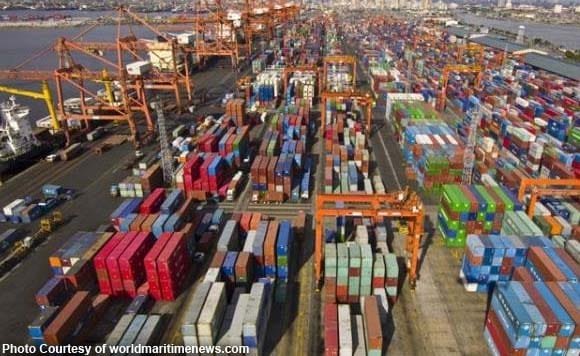
Port-adjacent industrial land in Cebu is finite.
It cannot be relocated.
It cannot be expanded at will.
And once absorbed by long-term operators, it rarely returns to the open market.
Access-driven corridors tend to strengthen over time — not because of speculation, but because infrastructure does not move.
For industrial investors, developers assembling port-area blocks, and companies securing a permanent logistics base, proximity to Cebu Port is not just operational.
It is structural.
For a broader overview of how the corridor functions, see our guide to port-linked industrial land in Cebu:
Infrastructure Dependency
Cebu Port remains one of the primary cargo gateways for the Visayas.
Importers depend on it.
Freight forwarders depend on it.
Distribution networks depend on it.
When land sits within short driving distance of critical infrastructure, its relevance is tied to trade flow — not market cycles.
This is different from generic industrial land located inland.
Port-linked industrial land in Cebu derives value from access.
That access cannot be duplicated elsewhere in the city.
Scarcity in the North Reclamation and Port Corridor
The North Reclamation corridor and immediate port-adjacent areas have limited titled industrial inventory.
There are no large-scale expansions redefining the immediate port boundary.
As parcels are absorbed by:
- Logistics operators
- Distribution centers
- 3PL companies
- Industrial users
Available supply narrows.
This is not a high-turnover segment.
Industrial land near Cebu Port typically changes hands infrequently because it becomes core infrastructure to the businesses that occupy it.
Scarcity here is geographic, not promotional.
Cebu’s Role in Visayas Trade
Cebu functions as a regional logistics hub for central Philippines.
Containerized cargo flows through Cebu Port to support:
- Import distribution
- Inter-island shipping
- Regional consolidation
- Provincial supply chains
Businesses entering the Visayas market often establish a base near the port to reduce inbound friction.
You can review which business profiles typically prioritize proximity here:
Who Typically Buys Port-Linked Industrial Land in Cebu?
As long as Cebu remains a trade gateway, port-adjacent industrial land retains structural relevance.
Operational Stickiness
Businesses dependent on port access rarely relocate far from it.
A freight forwarder or 3PL operating daily container movements will think carefully before moving inland.
Distance increases:
- Trucking time
- Fuel exposure
- Dispatch complexity
- Turnaround delays
This creates geographic stickiness.
Once a company establishes yard or warehouse operations near Cebu Port, that location becomes embedded in its workflow.
For investors and long-horizon operators, this stickiness supports corridor stability.
You can see how proximity affects daily cost structure here:
Replacement Difficulty
If a business loses access to port-adjacent land, replacing it is not simple.
Nearby parcels are limited.
Assemblage opportunities shrink over time.
Zoning and site dimensions may not align with operational needs.
This is why many truck yard operators who initially rent eventually evaluate ownership.
Control reduces replacement risk.
For operators evaluating whether to rent or secure long-term control, see:
Truck Yard Near Cebu Port: Rent or Buy?
Ownership is not about preference.
It is about securing position within a constrained infrastructure zone.
Logistics Hub Positioning
For companies building a long-term operational base, proximity allows integration of:
- Yard operations
- Warehouse development
- Dispatch control
- Container staging
When planned properly, a site near Cebu Port can function as a centralized logistics hub.
See site-level evaluation here:
Logistics Hub Near Cebu Port: Site Evaluation
Location becomes part of operational design.
Opportunity Within Constraint
Port-adjacent industrial land in Cebu does not appear in large volumes.
When titled parcels become available within the corridor, they represent:
- Established infrastructure access
- Position within an active trade flow
- Control inside a limited geographic boundary
Opportunity here is not about short-term timing.
It is about securing structural positioning before corridor absorption reduces optionality.
Is It a Strategic Asset?
Cebu Port industrial land becomes strategic when:
- Trade activity remains active
- Infrastructure dependency persists
- Corridor supply remains limited
- Businesses continue clustering around port access
For industrial investors, developers, and long-term operators, control of land near Cebu Port is not speculative.
It is positioning within a finite corridor tied directly to trade.
Current Port-Linked Industrial Site
There are titled industrial parcels currently available within short driving distance of Cebu Port:
Availability in this corridor is limited and infrequent.
Suitability depends on long-term operational intent and capital strategy.
Final Consideration
Industrial land near Cebu Port is not for every buyer.
It is for businesses and investors who understand infrastructure gravity.
When access is tied directly to trade flow, land becomes more than square meters.
It becomes control within a constrained corridor.
The decision is not about short-term pricing.
It is about long-term position.