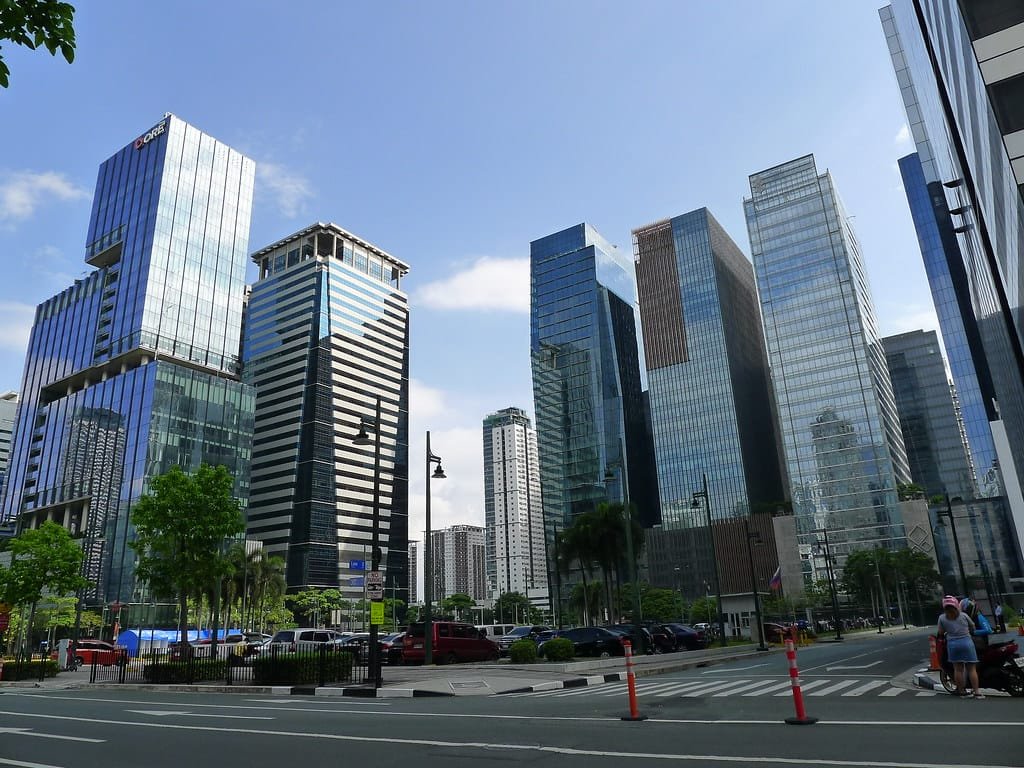
As global markets wrestle with inflation cycles, geopolitical tension, and uneven economic recoveries, the Philippine real estate sector is moving in a different direction—forward, selectively, and with surprising resilience.
Far from being insulated from global forces, the Philippine market has simply adapted faster. According to market observations from Leechiu Property Consultants, the country’s core property segments—offices, luxury residential, and retail malls—are entering 2026 on stronger footing than many would expect in a climate of uncertainty.
This strength is not speculative. It is structural.
Offices: From Overbuilding to Smart Consolidation
The office market is often misunderstood through a post-pandemic lens. Headlines focus on vacancies, but the reality on the ground tells a more nuanced—and more investable—story.
Office demand in the Philippines hasn’t disappeared; it has consolidated. Companies are moving away from older, inefficient buildings and into:
- Prime locations
- Grade A developments
- Offices integrated with transport, residential, and lifestyle components
This “flight to quality” favors landlords and developers who invested early in modern assets. Business process outsourcing (BPO), technology firms, shared services, and multinational companies continue to view the Philippines as a strategic base—driven by a deep talent pool, competitive labor costs, and strong English proficiency.
Hybrid work has not killed offices; it has reset expectations. Occupiers now demand efficiency, flexibility, and experience. Buildings that deliver these are seeing steadier absorption and stronger long-term prospects.
Luxury Residential: Stability Through Scarcity
The luxury residential segment remains one of the market’s most dependable performers.
Unlike mass housing, high-end residential demand is not driven by leverage or short-term flipping. Buyers in this segment are typically:
- High-net-worth families
- Overseas Filipinos
- Long-term investors prioritizing capital preservation
Supply remains limited in truly prime locations, while demand continues to favor developments with strong branding, security, privacy, and access to business districts. As a result, pricing in the luxury segment has proven remarkably sticky, even during broader economic slowdowns.
Rather than cooling, the market is becoming more selective. Well-positioned projects continue to attract interest, while average offerings struggle—again reinforcing the theme that quality is winning.
Retail and Malls: A Structural Advantage Few Markets Have
If there is one sector where the Philippines consistently defies global pessimism, it is retail.
In many countries, malls are shrinking or being repurposed. In the Philippines, malls remain central to daily life. They function not only as shopping destinations, but as:
- Community hubs
- Dining and entertainment centers
- Climate-controlled social spaces
Strong foot traffic continues to support tenant demand, especially for food, leisure, services, and experiential retail. Mixed-use developments anchored by malls are particularly resilient, benefiting from built-in residential and office populations.
This is not a temporary trend. It is cultural, demographic, and urban in nature—making retail assets in the right locations consistently relevant.
What This Means for Investors and Buyers
The Philippine real estate market in 2026 is not about broad-based rallies or speculative surges. It is about precision.
Opportunities exist for those who understand:
- Location-specific demand
- Asset quality differentiation
- End-user behavior rather than hype
Office investors benefit from focusing on premium buildings that match modern occupier needs. Luxury residential buyers gain from scarcity and long-term value protection. Retail investors continue to see stable income where developments are integrated, accessible, and experience-driven.
This is a market that rewards discipline and punishes shortcuts.
The Bigger Picture
While global uncertainty has caused hesitation elsewhere, it has had a clarifying effect on the Philippine property sector. We are seeing a market that is filtering itself, strengthening its core, and moving toward maturity.
For serious buyers, occupiers, and investors, 2026 is less about waiting for perfect conditions and more about recognizing where resilience is already visible.
History shows that Philippine real estate does not move in dramatic cycles—it advances in measured steps. Those who understand this tend to enter earlier, position better, and hold longer.
In a world obsessed with volatility, that kind of consistency is an asset in itself.