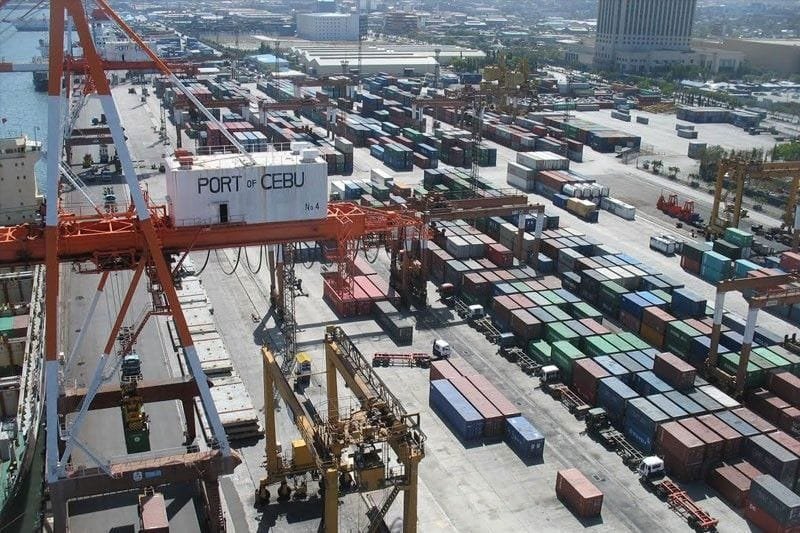
Logistics Economics, Capacity Trends & Land Implications
Executive Summary
- Cebu ports handled 71.9 million metric tons in 2024.
- Container throughput reached 993,270 TEUs (2024).
- The ₱16.93B New Cebu International Container Port (NCICP) in Tayud, Consolacion will add ~375,900 TEUs annual capacity by Q2 2028.
- Core port-adjacent land in Mandaue is largely built-out.
- North Cebu (Consolacion–Compostela) is the structural expansion corridor.
If port logistics materially affects your cost of goods sold, land proximity is a capital decision — not a convenience.
1. Why Port Proximity Changes Industrial Economics
After roughly 8–10 km from the port, trucking costs escalate non-linearly due to congestion and bottlenecks .
This is not theoretical.
Cebu traffic has been estimated to cost ~₱1.1B per day in lost productivity .
For industrial operators, this translates into:
✔ Shorter Drayage
- Lower fuel cost per container
- Lower driver hours per trip
- More cycles per day
✔ Predictability
- Fewer choke points
- Reduced idle time
- Lower demurrage exposure
✔ Inventory Efficiency
- Smaller safety stock
- Faster turnaround
- Tighter working capital cycles
If you move high volumes of imported inputs or export containers, this compounds annually.
For immediate port-adjacent opportunities, see Industrial Lot Near Port Area.
2. Port Infrastructure: Current Capacity & What’s Changing
Cebu Port System (2024)
- 71.901M metric tons total cargo
- 993,270 TEUs handled
- Cebu International Port (CIP) handled ~425,084 TEUs in 2022
- ~207,761 imports
- ~54,952 exports
Container growth is trending upward.
Capacity expansion is not speculative — it is underway.
New Cebu International Container Port (NCICP)
Location: Tayud, Consolacion
Investment: ₱16.93 Billion
Land Area: 25 hectares reclaimed
Berth: 500 meters (12m depth)
Yard Capacity: 14,400 TEUs
Annual Capacity: ~375,900 TEUs
Target Completion: Q2 2028
When operational:
- NCICP will handle international containers
- The Cebu baseport shifts focus to domestic, bulk, Ro-Ro
This materially shifts logistics gravity northward.
Private Capacity Expansion
OPASCOR (CIP operator):
- New 3,500-TEU yard in Consolacion
- Planned 50,000-TEU port in Compostela (Phase I)
Private capital is aligning with the north corridor before 2028.
That is not random.
3. Corridor Breakdown: Logistics & Land Implications
A. Mandaue / Baseport Zone
Strengths
- Effectively zero drayage
- Immediate port adjacency
- Established industrial clustering
Constraints
- Highly built-out
- Limited large contiguous parcels
- Premium land pricing
- Internal congestion friction
Best suited for:
- Time-sensitive import/export
- High container turnover operation.
For currently available parcels within the city core, see Industrial Lots for Sale in Cebu City
B. North Corridor (Consolacion – Liloan – Compostela)
Today:
- ~8 km north of baseport
- Larger tracts available
- Lower land pricing relative to Mandaue
By 2028:
- Direct NCICP adjacency
- Expanded container capacity
- Reduced baseport congestion
This corridor transitions from “peripheral” to “strategic.”
Good fit for:
- 3PL hubs
- Export staging yards
- Large footprint warehouses
- Future-oriented industrial operators
C. South (SRP & Southern Cebu)
- 300-hectare reclaimed zone in Cebu City
- Strong road connectivity (Coastal Road, CCLEX)
- Limited ocean freight advantage
Best suited for:
- Regional distribution
- Air-linked logistics
- Domestic consumption supply chains
Not optimal for:
Port-dependent manufacturing
4. Logistics Cost Logic — What Actually Drives Cost
Industrial operators should focus on three cost multipliers:
1️⃣ Distance
Each km adds:
- Fuel
- Labor time
- Opportunity cost
In Metro Cebu, small distance differences can double real transit time.
2️⃣ Congestion
Urban bottlenecks create:
- Container dwell variability
- Demurrage exposure
- Planning inefficiency
3️⃣ Turnaround Time
Near-port staging:
- Faster unload cycles
- Lower stacking pressure
- Reduced buffer inventory
This is about variability reduction as much as direct savings.
5. Who Port-Linked Land Actually Makes Sense For
Ideal Users
- Import-heavy manufacturers
- Export-driven producers
- Cold chain operators
- National 3PL operators
- Container-intensive distribution hubs
Probably Not Worth the Premium
- Purely domestic distributors
- Labor-driven assembly operations
- Low-margin operators where trucking <5–10% of margin
If port logistics is immaterial to your margin, proximity is unnecessary.
6. Scarcity & Valuation Dynamics
Core Constraint
Industrial land in Mandaue/Cebu City is largely filled. Assemblage is difficult .
Northward Pressure
NCICP completion will:
- Increase demand in Consolacion
- Increase hold behavior by landowners
- Compress yields near future container flows
Capital Implication
Reliable port access typically:
- Supports longer leases
- Reduces tenant turnover
- Compresses cap rates
Distance introduces risk premium.
7. Strategic Takeaway
This is not about “near the port.”
It is about:
How much variability and transport cost are you willing to absorb annually?
If proximity saves:
- ₱X per container
- × Y containers per year
- Over Z years
The land premium becomes quantifiable.
Executives should model logistics impact before negotiating price.
If port logistics materially affects your operating margin, we can map corridor selection to your container volume and cost structure.